AR
AR
 English
 Urdu
Urdu
 Hindi
Hindi
 Bengali
 Indonesian
 Filipino
 Nepali
 中文
中文
Ceramic and Porcelain Tile in Saudi Arabia: Types, Sizes, Quantities, and Installation
A complete guide to ceramic and porcelain tile in Saudi Arabia: ceramic vs porcelain, available sizes, brands (Saudi Ceramics, Navarti, Casalgrande Padana), and price bands from Almadah's catalogue (thousands of products, 23/09/2026).
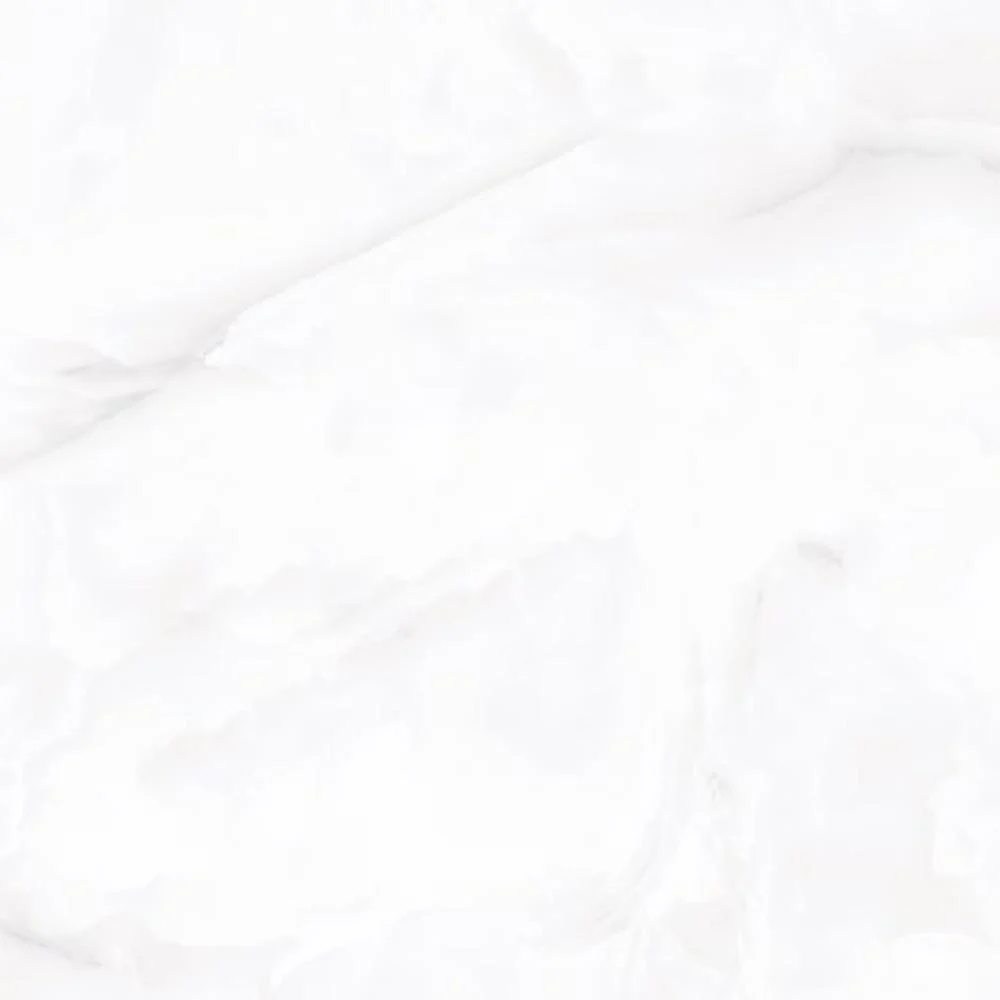
Short answer: Almadah's floors and wall coverings category splits into two branches: ceramic and porcelain tile (floor and wall tile from 20×20 up to 60×120 cm), and installation accessories (spacers, edge profiles, and roughing compounds). The current median price is SAR 71.68 per piece, VAT-inclusive, and the most widely stocked size is 60×120 cm.
What are the branches of the floors and wall coverings category?
| Branch | What it is | Catalogue availability | Used for |
| Ceramic & porcelain tile | Floor and wall tile: ceramic, porcelain, and natural marble | Thousands of products | Interior and exterior floors and walls |
| Flooring installation accessories | Aluminium spacers, edge-finishing profiles, roughing compounds | Hundreds of products | Fixing tile and finishing its edges |
A related branch sits outside this category: tile adhesives and grout — the adhesive and grout needed to lay the tile itself.
What's the difference between ceramic and porcelain, briefly?
Porcelain is denser and absorbs far less water than standard ceramic, so it holds up better on exterior floors and under heavy use, while ceramic stays the lighter, more budget-friendly choice for interior walls. Almadah's catalogue currently carries a much wider porcelain range than traditional ceramic. A full comparison (water absorption, hardness, and which one suits floors) is coming as a separate article in this cluster.
What sizes are available, and which room do they suit?
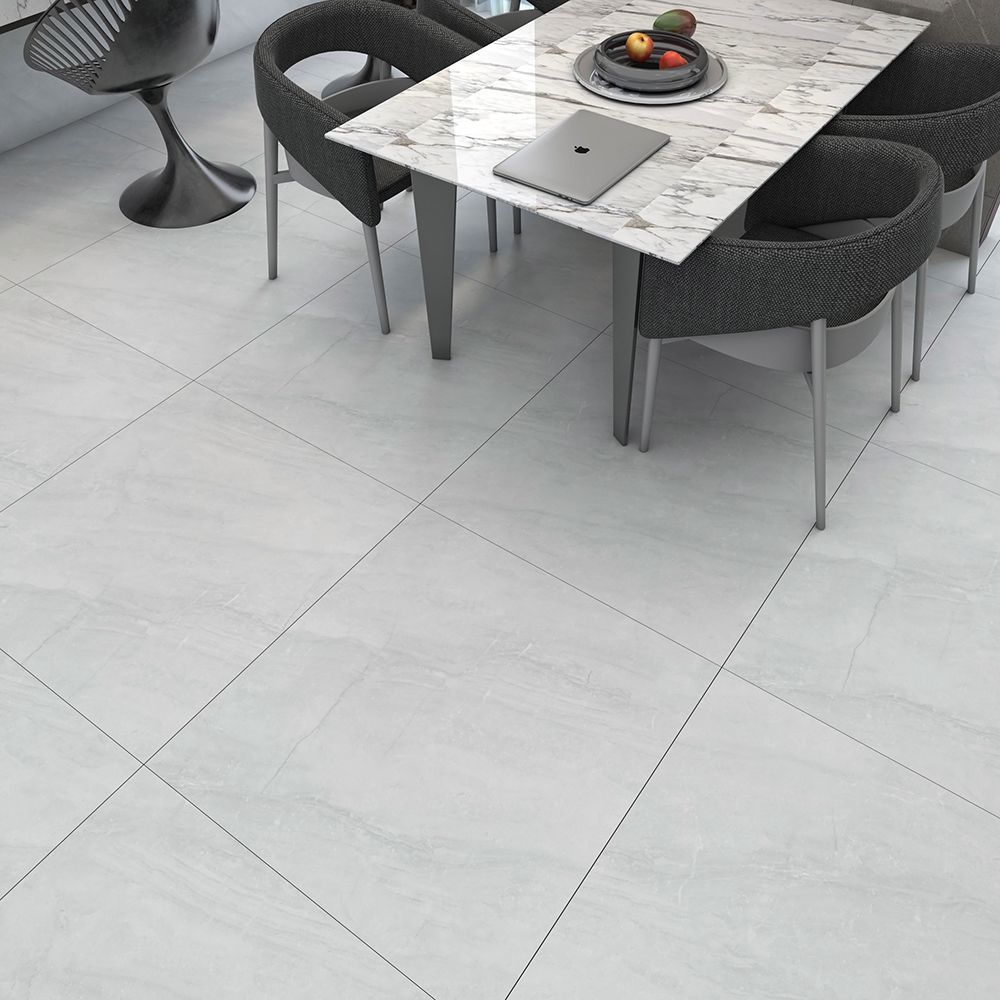
Larger format tile means fewer visible expansion joints, which explains why the Saudi market has been moving toward it in recent years:
| Size | Current catalogue availability | Common use |
| 60×120 cm | Most widely stocked right now | Large floors and walls, fewer joints |
| 60×60 cm | Widely available | Living and reception rooms |
| 30×60 cm | Widely available | Bathroom and kitchen walls |
| 30×30 cm and 120×120 cm | Available | Small floors / large premium finishes |
| 20×20 cm | Available | Mosaic and bathroom floors |
| 40×40 cm and 80×80 cm | Limited | Transitional sizes with lower current demand |
What brands are available, and what's the price band?
By product count, the catalogue is led by Saudi brand Saudi Ceramics, alongside Spain's Navarti Ceramics, Italy's Casalgrande Padana and Marca Corona, then ORYX and Riyadh Ceramics, plus Chinese brands like Fujian Industry and King Wang, and mosaic specialists such as ONIX Mosaico.
The actual best seller right now is ORYX ceramic floor tile 60×60, a sign the market currently favours mid-size tile at a moderate price point over larger, pricier formats.
Price band (VAT-inclusive, as of 23/09/2026):
- Cheapest ceramic or porcelain piece: SAR 1.15 (small pieces and mosaic)
- Median price for the ceramic & porcelain branch: SAR 71.68 per piece — the most telling figure for an ordinary piece
- Highest: SAR 8,961.03 (natural marble slabs and large-format premium porcelain)
- Installation accessories: median SAR 103.50, range from SAR 1.15 to SAR 23,024.83 (includes large profile assemblies)
Why the median matters more than the mean: the arithmetic mean in the ceramic & porcelain branch sits near SAR 134, pulled up by natural marble slabs and large-format premium porcelain. The median says half the pieces in this branch cost less than SAR 71.68.
How much tile do you need?
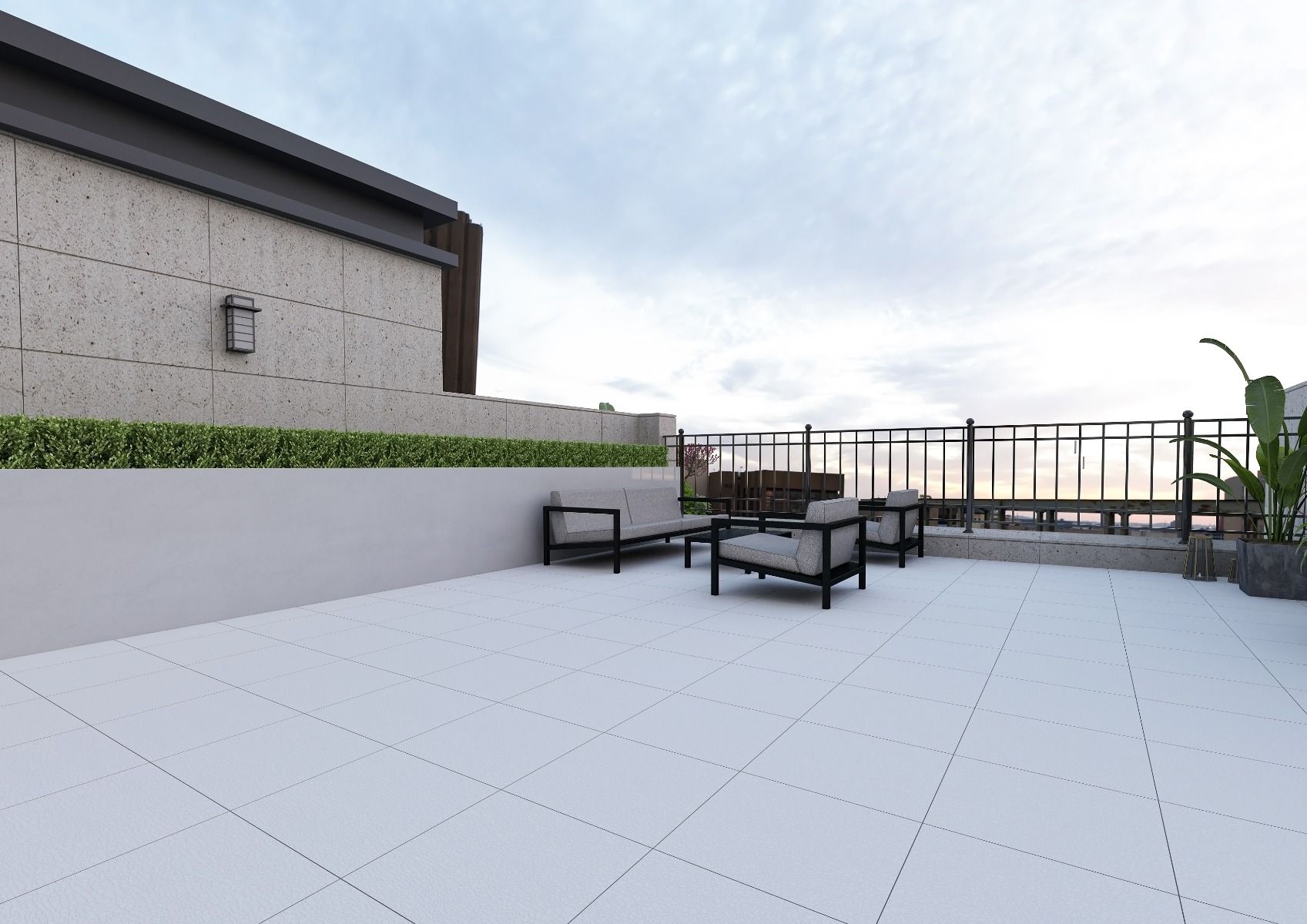
The calculation depends on room area, tile size, and cutting waste: roughly 10% for a straight lay and 15% for a diagonal lay. A detailed calculator covering the common sizes (60×60, 30×60, 120×60) and how many boxes each needs is coming as a separate article in this cluster.
How do you choose tile for exterior floors and bathrooms?
Exterior floors and surfaces exposed to rain and dust need tile rated R10 or higher for slip resistance, rising to R11 on steep slopes or in consistently wet areas. Ordinary indoor residential floors don't need this rating. A full breakdown of R ratings matched to catalogue products is coming as a separate article.

What are the most common installation mistakes?
- Hollow sound under the tile: usually caused by insufficient adhesive coverage or poor floor levelling before installation, and it gets worse with large-format tile (60×120 and up).
- Skipping expansion joints: laying tile edge-to-edge without joints leads to cracking or tenting as the floor expands in summer heat.
- Mixing batches and ranges: slight thickness differences between production batches show up in the finished surface level.
A longer list of eight common mistakes and their fixes is coming as a separate article in this cluster.
Frequently asked questions
What's the difference between ceramic and porcelain?
Porcelain is denser and absorbs far less water, making it suitable for exterior floors and heavy use, while traditional ceramic is lighter, better suited to interior walls, and more budget-friendly.
How many boxes of tile do I need for a 20 sqm room?
It depends on tile size and cutting waste: roughly 10% for a straight lay, 15% for a diagonal lay. A detailed calculator covering all common sizes is coming soon in this cluster.
What's the most widely stocked tile size right now?
60×120 cm is currently the most available, followed by 60×60 cm and then 30×60 cm — reflecting the market's shift toward large-format tile to reduce the number of joints.
Does 60×120 cm tile need a special adhesive?
Yes. Large-format tile needs a flexible adhesive rated at least C2S1, along with precise floor levelling, to avoid hollow spots under the tile. See tile adhesives and grout for details.
What does tile cost in Saudi Arabia?
The current median price in Almadah's catalogue is SAR 71.68 per piece of ceramic or porcelain tile, VAT-inclusive, as of 23/09/2026. The actual price per square metre depends on tile size and how many pieces cover one metre.
What brands are available?
The catalogue is led by Saudi Ceramics, alongside Spain's Navarti and Italy's Casalgrande Padana and Marca Corona, plus ORYX and Riyadh Ceramics, and Chinese brands such as Fujian Industry and King Wang.
Can wall tile be used on floors, or floor tile on walls?
Generally not advisable. Wall tile is lighter and less rigid and cannot handle floor loads and friction, while floor tile is heavier and doesn't always suit vertical installation easily. The detailed difference is covered in a separate upcoming article.
What slip-resistance rating suits exterior surfaces?
R10 or higher is recommended for exposed surfaces facing rain and dust, rising to R11 for steep slopes or consistently humid areas.
Related
- Full floors and wall coverings category — thousands of products
- Ceramic & porcelain tile · Flooring installation accessories · Tile adhesives and grout