AR
 English
 Urdu
 Hindi
 Bengali
 Indonesian
 Filipino
 Nepali
 中文
The Complete Guide to PPR Supply Pipes, Valves, and Fittings: Sizes, Pressure Ratings, and Welding
Guide to PPR supply pipes, valves, and fittings in Saudi Arabia: sizes from 20 to 63 mm, PN10 to PN25 pressure ratings, heat fusion welding, and price range and median from Almadah's catalog (VAT-inclusive, 22/10/2026).
Short answer: PPR pipe is the standard cold and hot water supply system in modern buildings. It is joined by heat fusion at about 260 degrees Celsius for leak-free joints, and chosen by diameter (20 to 63 mm) and pressure rating (PN10 to PN25), then completed with fittings and valves. Almadah splits the category into thermal pipes, fittings and elbows, and valves and control valves.
What does the PPR Supply Pipes and Fittings category include in Almadah's catalog?
The main category, PPR Supply Pipes and Fittings, has three sub-categories, and every product sits in a sub-category rather than the parent. Search by size (such as 32 mm) or by type (elbow, valve, manifold) instead of by category alone, because industrial items in NPT and inch sizes share the same branches as PPR parts.
| Branch | What is inside | Price range (SAR) | Median (SAR) |
| Thermal pipes | 5.8 m PPR pipe, manifolds, couplings and end caps, threaded NPT items, some plumber's tools | 1.13 to 24,995.25 | 58.44 |
| Fittings and elbows | 45 and 90 degree elbows, couplers, tees, reducers, end caps, transition fittings | 0.44 to 3,363.08 | 10.96 |
| Valves and control valves | Angle, ball, gate, and buried valves, plus control valves, including industrial and metal items | 1.09 to 85,941.80 | 50.60 |
Prices are VAT-inclusive at 15%, from Almadah's catalog as of 22/10/2026, on published and approved products only. The ranges are wide because the branches mix a one-riyal part with large industrial valves, so compare like with like.
What is PPR pipe and why is it used for water supply?
PPR is polypropylene random copolymer, a plastic that does not rust and resists scale far better than galvanized steel. Joints are made by fusion, so the fitting and the pipe become one piece. It carries cold and hot water inside a building, and its temperature capacity depends on the pressure rating. Its weak point is direct sunlight, so cover, bury, or insulate any run that crosses an exposed roof. For a general comparison with PVC and copper, read How to Choose the Right Plumbing Pipes.
What do PN10, PN16, PN20, and PN25 mean?
PN is the nominal pressure in bar at 20 degrees Celsius over a long design life. A higher number means a thicker wall and a smaller bore for the same outside diameter. The practical rule manufacturers agree on: allowable pressure drops as water temperature rises, so never pick a pipe by the PN number alone; check the manufacturer's table for your operating temperature.
| Rating | Typical use | Note |
| PN10 | Cold water at low pressure | Thin wall, usually not for hot water |
| PN16 | Cold, and hot at moderate temperature | Per manufacturer table |
| PN20 | Cold and hot; the most common for home supply | Thicker wall, smaller bore |
| PN25 | Hot water at higher temperature and pressure, often a fibre-layer composite pipe | Ask the manufacturer for temperature limits |
A detailed comparison of the four ratings is in an upcoming spoke article in this cluster.
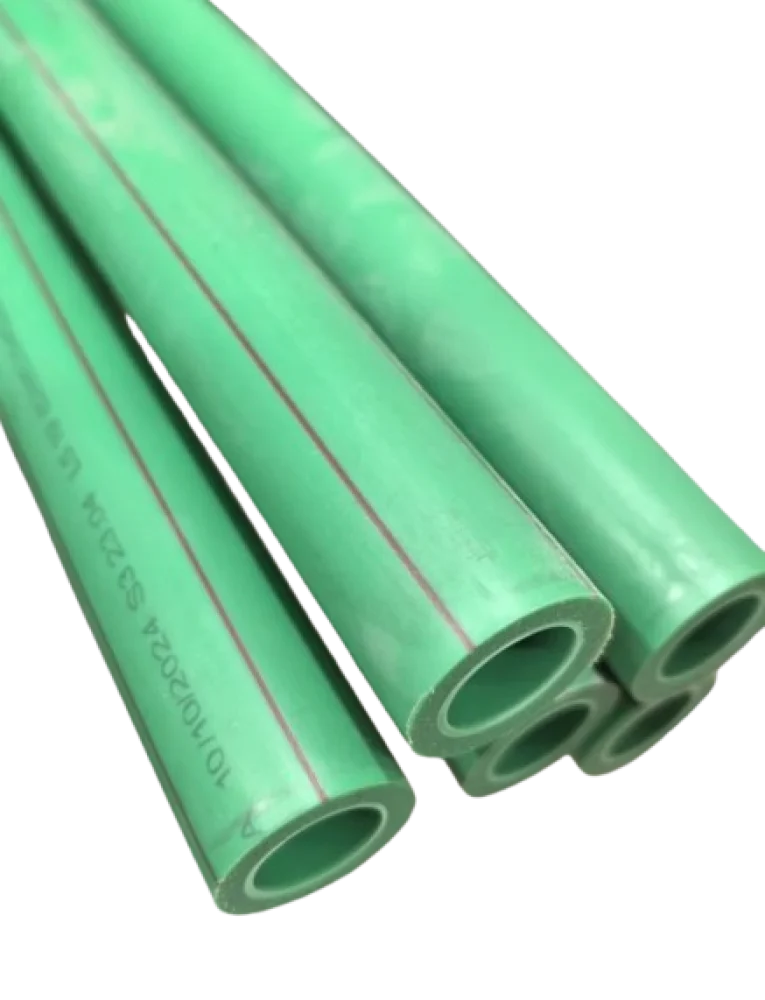
Which PPR pipe size suits which line in a building?
Pipes are sold by outside diameter in millimetres. This table is a guide for villas and small to mid-size buildings; actual flow and pressure sizing belongs to the engineer or licensed plumber:
| Size (mm) | Roughly equals | Typical use |
| 20 | 1/2 inch | Branch to a tap, mixer, or bidet spray |
| 25 | 3/4 inch | Bathroom or kitchen branch; manifold outlet |
| 32 | 1 inch | Floor or water heater line; inlet of a small manifold |
| 40 to 50 | 1 1/4 to 1 1/2 inch | Riser or main line for a villa |
| 63 | 2 inch | Main inlet or manifold header |
From the catalog as of 22/10/2026: a Neproplast 25 mm pipe, 5.8 m long, is SAR 32.33, and a 32 mm, 5.8 m pipe is SAR 50.47 (VAT-inclusive).
How do you weld PPR pipe, and what mistake is most common?
Socket fusion welding: the pipe is heated on the outside and the fitting on the inside on a welding tool at about 260 degrees Celsius, then the pipe is pushed straight into the fitting without twisting and left to cool. The most common mistake is heating for less or more than the time set for that size, or rotating the pipe while pushing. A heating and cooling time table for each size is in the upcoming step-by-step PPR welding article in this cluster; do not use any figure that does not come from the manufacturer's table.
What fittings and elbows does a PPR system need?
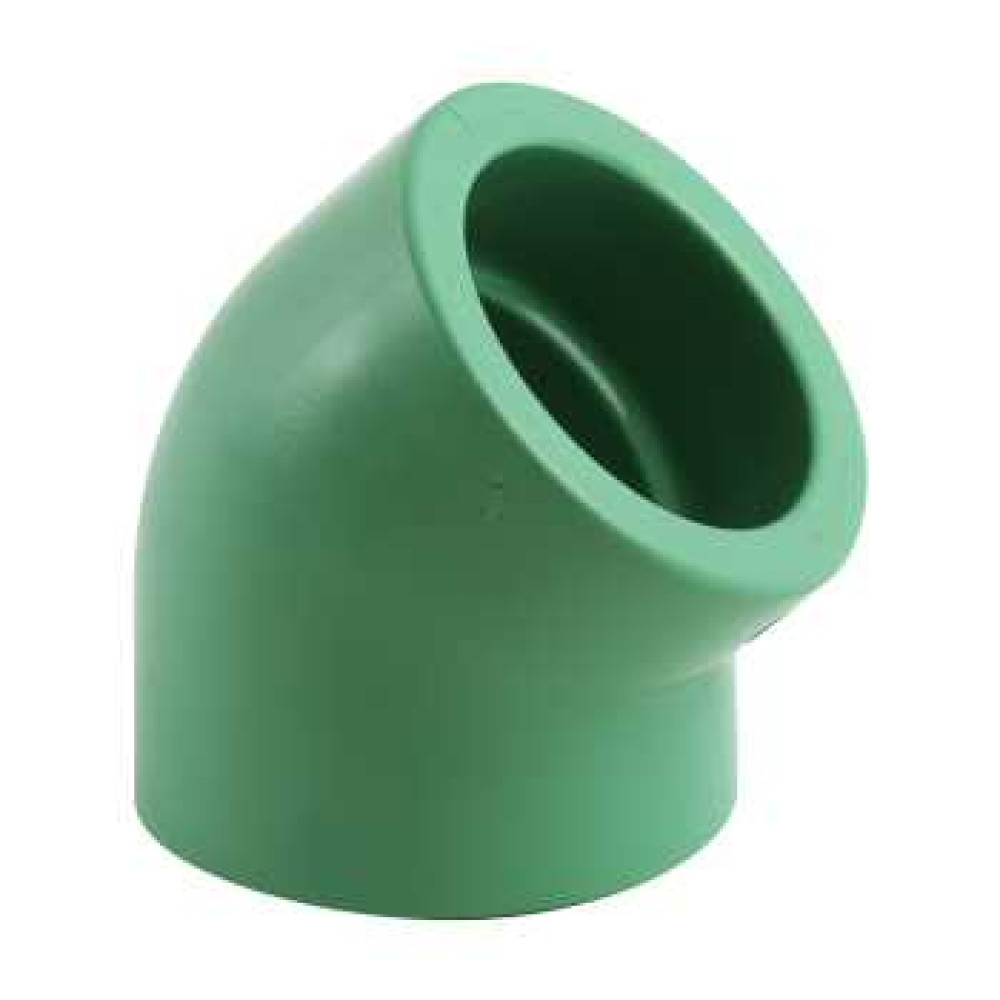
Every network repeats the same parts: 90 and 45 degree elbows to change direction, a tee to branch, a coupler to join two pipes of equal size, a reducer to step down in diameter, an end cap to close a run, and a transition fitting with a brass thread (male or female) to reach mixers and threaded valves. The less obvious one is the union, which lets you disconnect a line for service without cutting it. Match each fitting to the pipe diameter, from the Fittings and elbows branch.
What types of valves are there and where does each go?
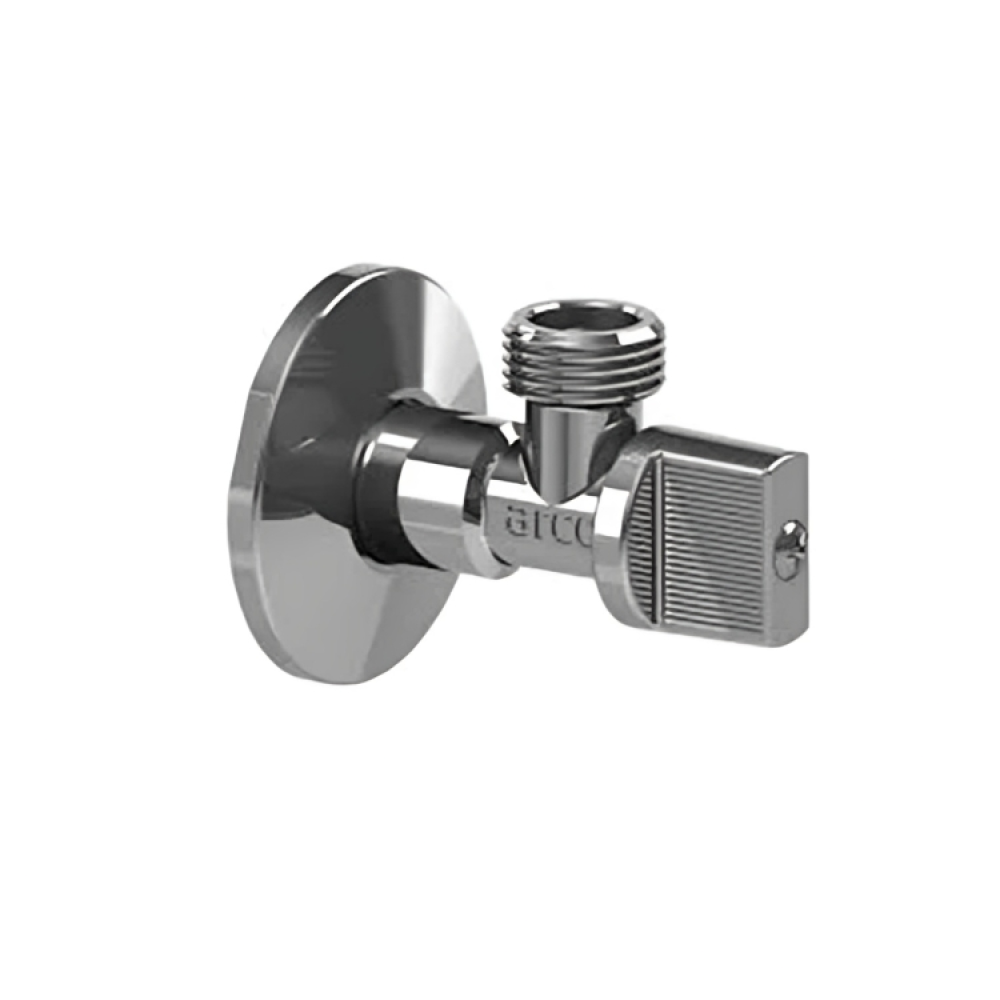
A ball valve opens and closes with a quarter turn and serves as a general isolation valve for a floor or water heater. A gate valve suits large lines that are rarely operated. An angle valve sits under a basin or behind a toilet to isolate that one fixture. A buried (concealed) valve is installed inside the wall with only the handle visible. Check valves, pressure-reducing valves, and float valves round out the set. A detailed valve guide is in an upcoming spoke article. Items are in the Valves and control valves branch.
What is a manifold and when is it worth it?
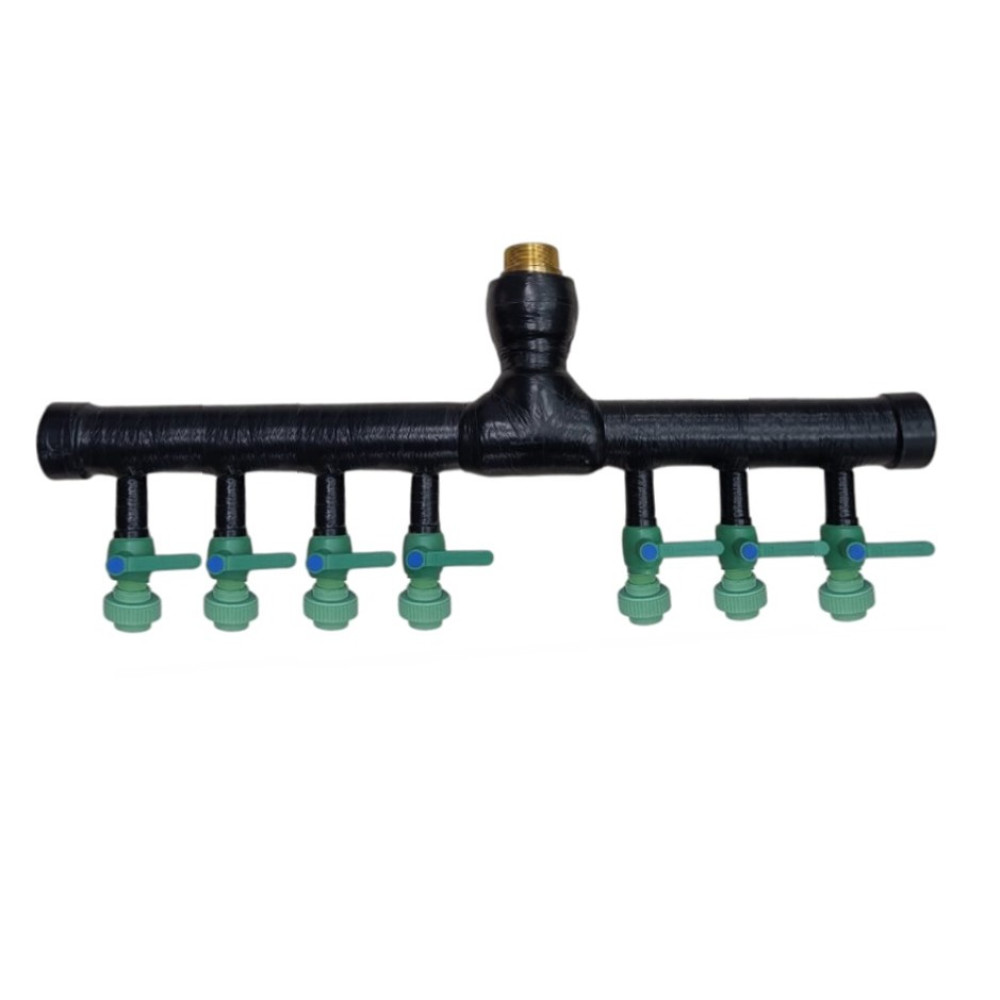
A manifold is a header from which independent lines run to each bathroom or kitchen, so you can shut off one line without cutting water to the whole villa, and fewer joints are hidden inside walls. The catalog names it with two diameters, such as 63×32: the first is the header, the second the outlets, followed by the number of outlets and whether it is insulated. It costs more than conventional branching but saves maintenance in new villas. A cost and maintenance comparison is in an upcoming spoke article. As of 22/10/2026 thermal manifolds in the catalog range from SAR 598.00 to SAR 2,622.00 depending on diameter and number of outlets (VAT-inclusive).
What is the price range and median?
Price range across the three branches combined (VAT-inclusive at 15%, as of 22/10/2026):
- Cheapest item: SAR 0.44
- Median price: SAR 22.25
- Arithmetic mean: SAR 237.18 (pulled up by manifolds and industrial valves)
- Highest: SAR 85,941.80 (an industrial valve)
Why the median, not the mean: the category mixes fittings that cost a few riyals with manifolds and valves that cost thousands, so the mean is more than ten times the median. Compare a manifold with a manifold and an elbow with an elbow.
Which brands and items are most in demand?
Among named brands, Grainger Approved leads, followed by ITCC, Al-Zamil, and Nibroplast, and a large share of items carry no named brand in the catalog. Actual order history in the category is still small; the top items are an insulated 63×32 mm PPR manifold with seven outlets, then an Arco 1/2×3/4 inch angle valve, then a Grohe 3/4 inch buried valve, then a 32 mm 45 degree elbow. This is an early signal from order history, not a market survey. For large quantities or a full project list, request a quote.
What spoke articles are coming in this cluster?
Links are added here as each article is published:
- PPR pipe sizes (20/25/32/40/63 mm): which size for which line in a villa.
- PN10 vs PN16 vs PN20 vs PN25: what the ratings mean and when you need a higher one.
- Manifold system vs conventional branching.
- PPR welding step by step and the mistakes that cause failures.
- Valve types: gate, ball, angle, check, pressure-reducing, and float.
- NPT vs BSP threads, PTFE tape, and hemp: stopping leaks at the source.
FAQ
What is PPR pipe?
Pipe made of polypropylene random copolymer for cold and hot water supply inside buildings. It does not rust and is joined by fusion welding, so the fitting becomes one piece with the pipe.
What PPR pipe sizes are available?
Common sizes run from 20 to 63 mm outside diameter. Per the catalog as of 22/10/2026: Neproplast 25 and 32 mm pipe in 5.8 m lengths, fittings up to 63 mm, and manifolds with 63, 75, and 90 mm headers.
What is the difference between PN10, PN16, PN20, and PN25?
PN is the nominal pressure in bar, and a higher number means a thicker wall. PN10 is mostly for cold water, PN20 is the most common for home cold and hot supply, and PN25 is for higher temperature and pressure. Allowable pressure falls as water temperature rises, so use the manufacturer's table.
How is PPR pipe joined?
By socket heat fusion: heat the pipe and fitting at about 260 degrees Celsius on a welding tool, then push them together straight without twisting and let them cool.
What is the difference between a ball valve, a gate valve, and an angle valve?
A ball valve closes with a quarter turn and works as general isolation, a gate valve suits large lines that are rarely operated, and an angle valve isolates a single fixture such as a basin or toilet.
What is a manifold and when should I use one?
A header with independent lines to each point of use, so you can shut off one line at a time. It suits new villas and fewer hidden joints, and costs more than conventional branching.
How much do PPR pipes and fittings cost?
As of 22/10/2026, VAT-inclusive at 15%: the category median is SAR 22.25. A 25 mm, 5.8 m pipe is about SAR 32.33, a 32 mm 45 degree elbow about SAR 5.75, and manifolds run from SAR 598.00 to SAR 2,622.00.
Are the prices VAT-inclusive?
Yes. Every price quoted includes 15% VAT, and no VAT is added on top of the listed price.